
A Meeting That Starts Itself: The Weekly With a Moderator
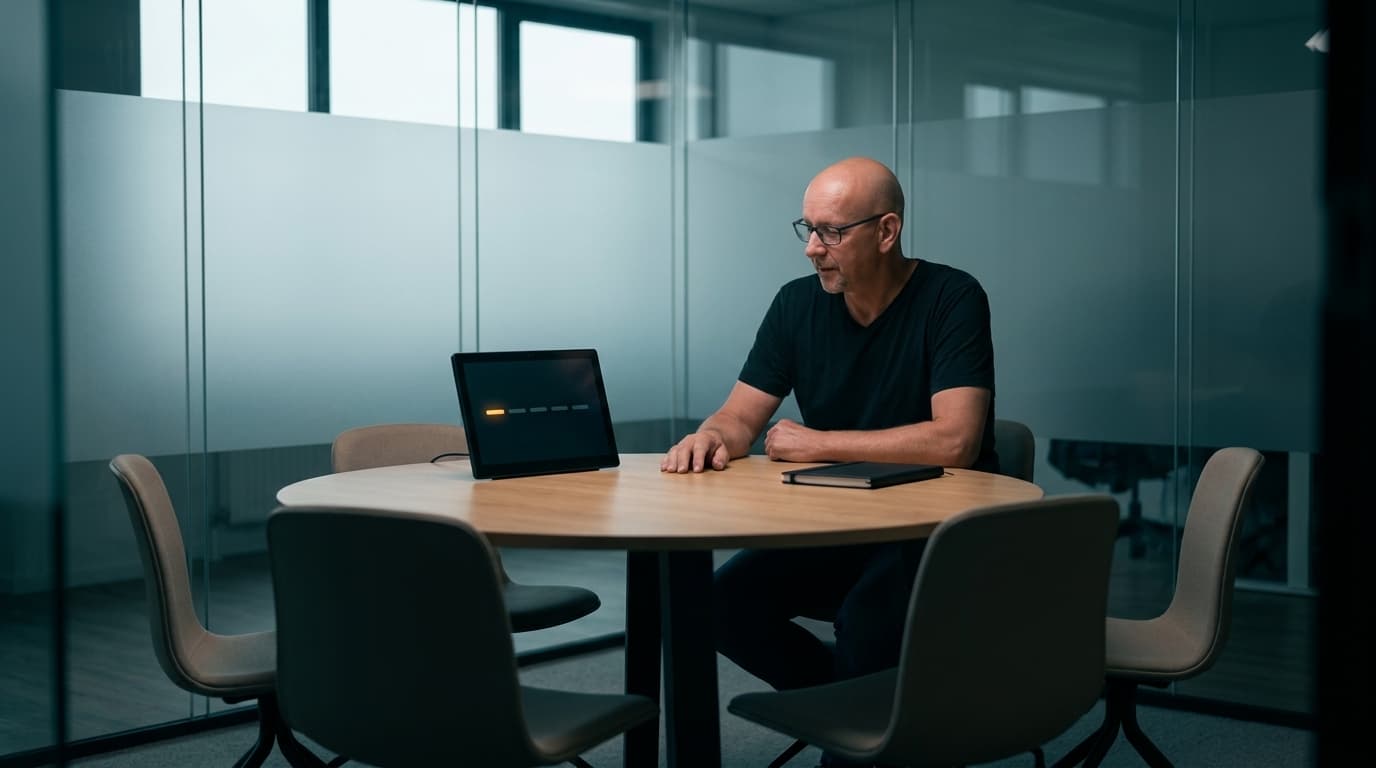
The weekly is the meeting everyone knows and nobody likes: no preparation, different questions every week, forgotten by Wednesday. In Rocket Routine OS, a Moderator opens the meeting by itself and leads through it with five fixed questions.
In short: In the weekly of Rocket Routine OS, a Moderator, an AI agent, opens the meeting by itself and leads through the agenda with five fixed questions. You set the agenda, the Moderator decides nothing, and what is decided goes to the areas.
This article shows what a Monday morning with the weekly in Rocket Routine OS looks like. How the product is built overall is in the whole picture.
What usually breaks a weekly
Four things repeat almost everywhere. Nobody prepared numbers, so the team talks about impressions. Topics are collected on the spot, and the loudest one wins. The order is different every week, so nobody notices when a topic has been missing for weeks. And at the end there are no minutes that anyone really follows up on.
That is not a discipline problem. Anyone who has to be moderator, note taker and participant at once does one of them badly.
The Moderator opens the meeting
The Moderator opens every meeting by itself. On Monday morning you open the room for the weekly, and it has already greeted everyone. Its first question is: "Any topics to add or remove? Anyone else to invite?"
You add "a customer's pricing question" and invite the head of sales. Then the Moderator leads through the agenda with guiding questions.
Five questions, the same every week
The standard agenda of the weekly consists of five questions. They stay the same every week, which is why it shows when something changes.
First: which KPIs crossed a warning line this week? A KPI is the number that measures a goal, for example the number of paying customers. Each KPI has a target and a warning line.
Second: which initiatives are on track, which are at risk, which are stalled? An initiative is a bet on a result, for example "test a new pricing model".
Third: does the quality of the work match what you agreed?
Fourth: how far along is each AI agent on its way to more independence? Every new AI head starts as a Copilot, handles small routine matters on its own and earns more over time. The weekly is where you see that.
Fifth: what did we learn that should change a routine?
Numbers on request
In the middle of the meeting you ask: "How are we doing on the first-customers goal?" The answer comes from the responsible AI head, here the VP Sales. A VP is the AI agent of a business area and is called VP plus the area. It answers with exact numbers: how many customers there are, how many offers are open and which tasks are linked to them. Where a number is not available, it says so.
There are two views for this. The Dashboard shows where you stand: goals, outcomes and KPIs. The Control Tower shows what is going on: initiatives, projects and work in progress. In the weekly you don't need to open either, because the answers come in the conversation.
Between the weeklies: Daily and Inbox
Between the weeklies, everyday work goes on. The Daily, if you switch it on, is a short check: what changed, what is blocked, what is waiting for a person, each with links. An intake routine reads your company's intake channels at a time you set and drafts tasks from real requests. They wait in your Inbox, the place in Rocket Routine where you approve things and receive reports. On Friday, for example, you approve two proposals there, a new KPI and a new routine. What you approve is material for the weekly on Monday.
What remains at the end
What is decided in the weekly does not get lost. A goal you create in the meeting chat is tied to the meeting and is passed to the responsible areas when the meeting closes. A decision is recorded in the decision log with its impact and its method, and a follow-up task can come out of it. The Moderator leads through the meeting, but it decides nothing. What is agreed, and whether the meeting is complete, you confirm.
You set the agenda
The five questions are a start. Any agenda can be defined. If you work with EOS, for example, you take the EOS agenda, and the Moderator leads through it. The rhythm is your choice too. For a new company in Founder mode, the daily check, the weekly, the quarterly meeting and the yearly meeting are switched on. The monthly meeting is recommended from Growth mode, and you can switch it on at any time.
Even alone
If you work alone, nobody demands the weekly from you. That is exactly why a Moderator that opens it by itself helps. You sit down with your AI heads and the Moderator, go through the same five questions and end up with decisions that someone has recorded. A company of one needs the same rhythm as a company of many. It only needs someone to keep it.
Frequently Asked Questions
What does the Moderator do in a meeting?
The Moderator is an AI agent that opens every meeting by itself, greets everyone and asks whether to add or remove topics and invite more people. Then it leads through the agenda with guiding questions. It does not make decisions, that stays with the people in the room.
Which questions does the weekly ask?
Five: Which KPIs crossed a warning line? Which initiatives are on track, at risk or stalled? Does the quality match what was agreed? How far along is each AI agent on its way to more independence? What did we learn that should change a routine?
Can I use my own agenda, for example the one from EOS?
Yes. Any agenda can be defined. If you work with EOS, for example, you take the EOS agenda, and the Moderator leads through it. You also decide which meetings run: in Founder mode the daily check, weekly, quarterly and yearly meetings are on, and you can switch the monthly meeting on at any time.
Do I need a weekly if I work alone?
Yes, especially then. If you work alone, nobody demands the meeting from you, and the Moderator opens it by itself. You go through the same five questions with your AI heads and end up with decisions that are recorded.
Want to build this in your own company?
Rocket Routine OS is the operating system behind these articles, and it is not open yet. Join the waitlist and you hear first, get a fortnightly honest account of what is working and what is not, and move further up the list with every referral.
Join the waitlistWant to understand the whole system?
The entire architecture of Rocket Routine OS as a PDF — 20 pages, freely available, no form required.
Download whitepaper (PDF)